“The vocabulary of one’s self-criticism is so impoverished and clichéd. We are at our most stupid in our self-hatred.”
“When I look at my life I realise that the mistakes I have made, the things I really regret, were not errors of judgement but failures of feeling.”
“Artists are people driven by the tension between the desire to communicate and the desire to hide.”
Sometimes we're responsible for things not because they're our fault, but because we're the only ones who can change them.
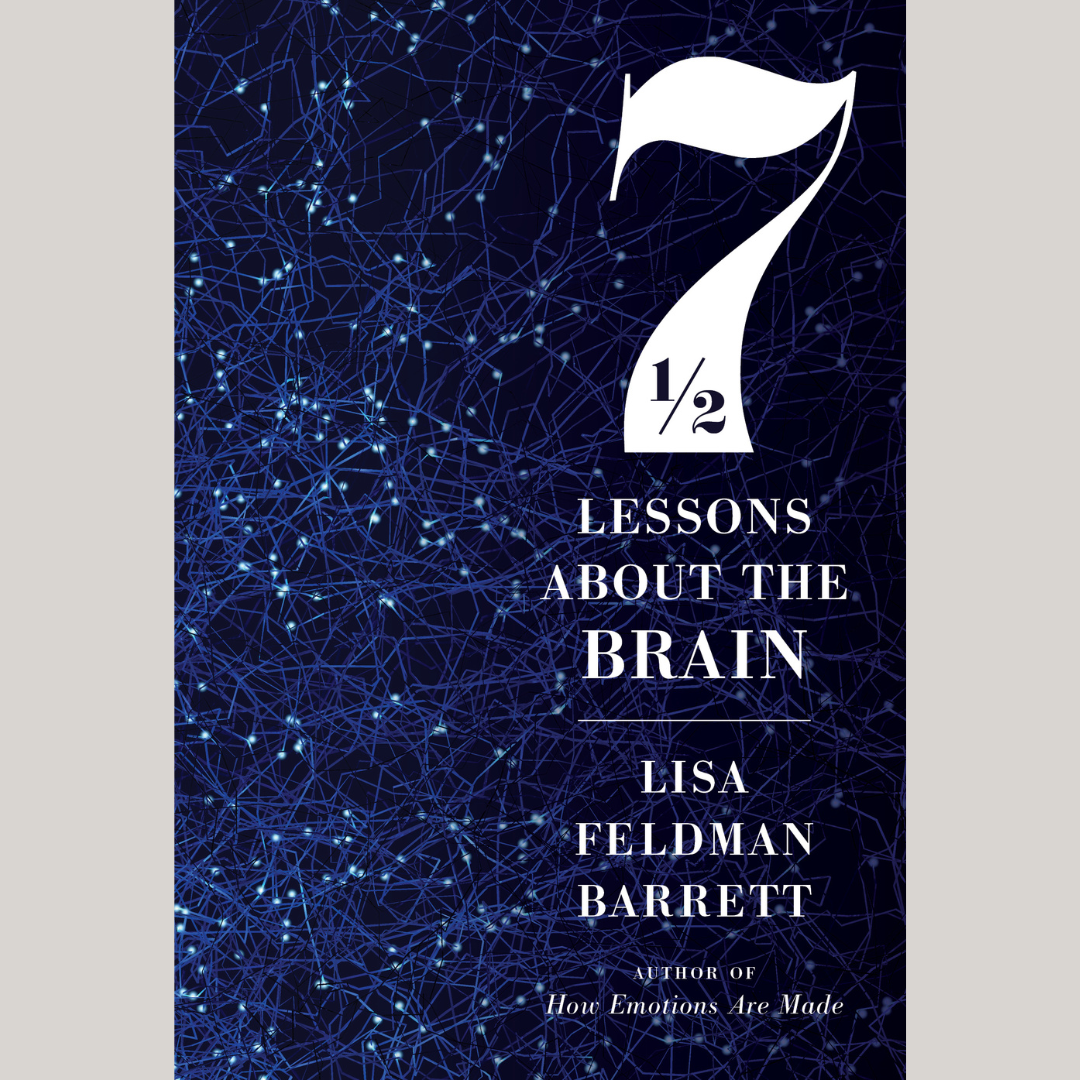
Lisa Feldman Barrett, Seven And A Half Lessons About The Brain
Groan. How much more must you do? Another one of those pithy self-help observations that should be empowering but leave you feeling worse.
Except it isn’t. These are the words of a highly respected neuroscientist, offering us a new way of perceiving ourselves, and — most importantly — a way to address chronic suffering and self-defeating behaviours.
If you’re here, you probably have a persistent, low-level sense that something is missing. Not dramatically wrong, not crisis-level (yet). Just a life smaller than it could be.
A self that feels somehow provisional.
An inner life that never quite coheres into something solid enough to stand on.
You’ve tried to understand it. Maybe therapy, maybe coaching, maybe years of reading and thinking. The understanding is real. The insights are valid. But nothing much changes.
That’s because real shifts require inner coherence — a robust sense of self that can only be built through attention and action. It cannot be thought into existence.
Most people who find their way here have already named their problem many times. Anxiety. Creative block. Relationship patterns. Self-sabotage. Procrastination. The inner critic that won’t shut up.
These are real. But they are symptoms of something underneath — a self that never quite formed into something reliable.
This discomfort hasn’t persisted because you lack effort, understanding, tools, or discipline. It isn’t even fully explained by a difficult childhood.
Neuroscientist Lisa Feldman Barrett’s research explains why: the self is not something you discover. It is something your brain constructs, continuously, from the materials available: other people’s responses, cultural concepts, embodied experience, repeated patterns of feeling and action. If those materials were unreliable, inconsistent, or simply absent, the construction is unstable.
You didn’t cause that. You definitely wouldn’t have chosen it.
“But you are the only one who can change it.”
Despite our thinking-level acceptance, this is often a deeply unwelcome thing to hear, and will most likely bring up many layers of resistance. Our approach can work with this.
What if your life is this, what’s here, in this moment, being lived. Not a new life that you’ll reach once you’ve found the right therapist, the right partner. If there is to be no awakening, no breakthrough, not even the moment of finally being seen, you let go and live here, instead of in the future.
Perhaps this is the most liberating understanding — maybe the most interesting and powerful part of the work we do here.
The Undoing is the process of that acceptance — and the building that becomes possible on the other side of it. When we stop waiting to be rescued, we can finally turn toward our own inner world with the attention and seriousness it deserves. That turning is where everything begins to shift.

This is not a therapist interpreting your patterns. Not a coach applying a model to your situation. Not someone who has reached some advanced state, holding out a hand from above.
It is a collaboration between two people who both know something about how minds work and what gets in the way. One of them, of course, is you.
Everything is welcome here.
Every odd belief, every story you’re ashamed of, every strange inner construction you’ve never shown anyone.
The work has two elements. The first is an expanded version of the Sedona Method, a structured process for releasing emotional discomfort and invasive thought loops. Not analysing, not reframing. Releasing. It is easy to learn and produces surprisingly fast results.
The second is action — writing, drawing, making, doing — in a structured space. Because a coherent self is not built through introspection alone. It is built through the experience of acting, surviving the discomfort of that, and discovering you have more agency than you believed.
This can be uncomfortable. The structure is there precisely because it is. You are not asked to manage that discomfort alone, you are asked to meet it in the presence of someone who has sat with it themselves and not been destroyed by it.
I am not a therapist, and I am not a certified coach. What I am is a trained Sedona Method facilitator with twelve years of practice — long enough to know what it can do, and when it does it, and why it sometimes doesn’t. I am also trained in and have practiced clinical hypnosis and bodywork.
The rest of my background is unusual for this kind of work, and I think that matters. Postgraduate fine art at the Royal Academy in London. Fifteen years writing complex technical documentation for investment banks. Trading. Trauma-informed bodywork and neuroscience. Making things. Getting things badly wrong. The combination means I can usually find a way to relate to what you bring.
The facilitation is not from a position of having arrived somewhere. Instead, it comes from a position of knowing this territory well, having crossed a significant amount of it myself.
Individual sessions are one hour, online, and built entirely around what you bring. There is no standard script, no programme to follow — each session starts from where you actually are.
One hour, online. No intake forms, no preliminary questionnaire. We start with whatever is most present for you right now and go from there.
You’ll receive an audio recording afterwards so you can repeat the processes as often as you need.
One session shifts something. Three is where patterns actually start to unravel.
With clients in all time zones and a flexible schedule, further sessions can be arranged spontaneously. After the first session, further meetings can be arranged spontaneously, subject to availability. This allows us to work with a pattern or feeling while it is activated.
You might also want to schedule a session just before an important event — a presentation, an interview — so that you arrive at it fully prepared.
The package includes:
Guarantee: If you complete all sessions and feel you haven’t benefitted, say so in the final session. I will refund you in full. No argument, no conditions.
“Sally is such a skilled and insightful facilitator […] Her calm manner and soothing voice give me a deep feeling that I can trust her completely.”
Just give it a go — the worst thing that can happen is you waste a few minutes, and the best case is the pain dissolves and your life gets bigger.
Download a free process recording and try the method before committing to anything. Or watch the YouTube channel — the most viewed video works with feelings about other people and takes less than twenty minutes.
Most people notice something shifting before it ends.
Or select the process below that fits your current mood or the theme you find yourself preoccupied with. This is just a small selection of releases — you’ll find many more on YouTube.